January 15, 2012

Court: Alcotest Reliable But Not Necessary for Drunk Driving Conviction

The State Appellate Division recently confirmed that the high-tech Alcotest to determine a person’s blood alcohol level is not necessary to proving a drunk driving case. In fact, a person suspected of driving under the influence can be convicted solely on the results of field testing, according to the court. (1) If after reading the following, you need a Hunterdon County lawyer that can assist you with a similar situation regarding drunk driving laws in New Jersey, contact DWI attorneys The Rotolo Law Firm located in Lebanon, New Jersey, on Route 22 in the westbound lane.

The case dates back to October 2008 and involves a woman who was stopped in Manchester Township for driving erratically. The woman admitted to having two glasses of wine but said her swerving was caused by reaching down to retrieve something she had dropped. Roadside sobriety tests were administered and the woman failed. She was then brought to the police station where she agreed to take an Alcotest, which showed her blood alcohol level to be 0.15. (1) The legal limit in New Jersey is 0.08. (2)

The woman blamed her poor performance on the sobriety tests, which included walking a straight line heel-to-toe and maintaining balance with feet together and while standing on one foot as directed, on her Graves disease, an autoimmune disorder, and the fact she was wearing high heels at the time. Her lawyers questioned the validity of the Alcotest since the officer who administered it had not observed her for the required 20 minutes prior to testing. As a result, they said the test results should not be considered.(1) The 20-minute observation period is intended to ensure the suspect does nothing that could alter the results of the test. (3)

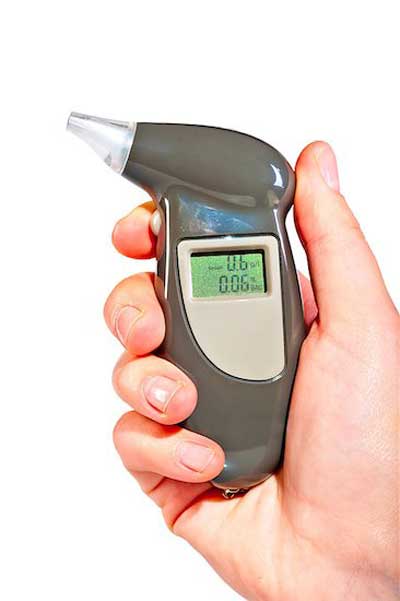
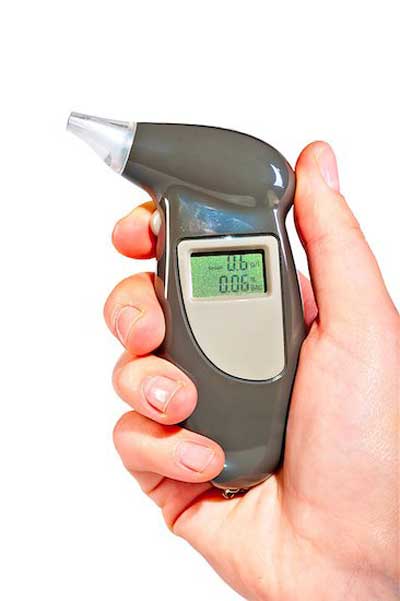
The Alcotest, which replaced the former Breathalyzer standard several years ago, is a fully-automated test that uses computer software to determine a person’s blood alcohol level. Initially there was much controversy surrounding the accuracy of the Alcotest. The State Supreme Court commissioned a study conducted by a retired Appellate Division judge who found the test to be much more accurate than the Breathalyzer standard. Based on those findings, the State Supreme Court has ruled that results from Alcotests are reliable. (4)

The above case initially was heard at the municipal level where the Alcotest results were deemed admissible, since it was determined that the officer administering the test did not have to be the same person who observed the suspect for the required time period. As the case progressed to the State Superior Court level, the prosecutor said that, due to the confusion over whether or not the observation period was monitored properly, he could not rely on the Alcotest. (1)

The Appellate Division concluded that the Alcotest is not necessary when there is sufficient evidence to convince the court that the defendant is guilty as charged. Such evidence includes the results of the field testing and the observations of the officer making the traffic stop. (1)

Driving under the influence (DUI) is a serious offense in New Jersey that carries fines ranging from $300 to $500 for a first offense, up to $1,000 for repeated offenses, plus additional fees and possible jail time. (2) Laws regarding DUI’s can be complicated and the penalties severe. If you or someone you know is involved in a DUI case in Hunterdon County, contact the lawyers at The Rotolo Law Firm.

(1) http://www.law.com/jsp/article.jsp?id=1202537242051&Woman_Convicted_of_DWI_Without_Alcotest_Loses_High_Heels_Defense&slreturn=1

(2) http://www.nj.gov/mvc/Violations/dui.htm

(3) http://www.nj.com/news/index.ssf/2009/12/state_court_rules_with_police.html

(4) http://www.totaldui.com/news/articles/breathalyzer/new-jersey-alcotest.aspx

Bookmark and Share

June 19, 2011

Court Says It’s Okay for Drunk Drivers to Sue Bars

Earlier this month the New Jersey Supreme Court issued a divisive ruling that, in effect, allows drivers convicted of driving under the influence to sue the bars that served them. (1)

The split decision (5-2) relates to a 2009 lawsuit filed by Frederick Voss against Tiffany’s Restaurant, Toms River, NJ. According to that suit Mr. Voss, who was driving a motorcycle, was involved in an accident after he had been drinking at the restaurant. Voss, who had a reported blood alcohol level of 0.196, pleaded guilty to driving under the influence. The legal alcohol limit in New Jersey is 0.08. (1)

Although he pleaded guilty to the DUI, Voss sued the owner and driver of the car that hit him, as well as the restaurant for continuing to serve him even though he clearly was intoxicated. An Ocean County Superior Court judge dismissed the actions against the car’s driver and owner citing a 1997 statute that prohibits anyone convicted of drunk driving from suing for damages. The judge, however, allowed the action against the restaurant citing the State’s dram shop laws, which were adopted some ten years earlier. (2)

Dram shop laws (so named from the colonial era practice of serving alcohol by units of liquid measure) state that servers and the owners of establishments that serve alcohol can be held financially responsible for injuries or property damages caused by an intoxicated customer’s action, including drunk driving. (3)

At issue in this case is whether the 1997 statute repeals the older dram shop laws. The majority Supreme Court decision claims it does not, noting that both aim to reduce the incidents of drunk driving.

Under the 1997 statute, injured drunk drivers are denied the right to sue for insurance coverage of their injuries – a measure designed to deter drunk driving under automobile insurance reform. The dram shop laws also act as a deterrent by holding liquor establishments accountable for the actions of their patrons whose judgment may be impaired due to their alcohol consumption. (2)

Two dissenting justices stated that the 1997 statute clearly bans drunk drivers from suing anyone in connection with accidents they may have as a result of their drinking. The majority opinion, however, contends that the 1997 statute pertains only to automobile insurance matters and was not intended to supersede the dram shop laws. (2)

(1) http://www.northjersey.com/news/crime_courts/crime_courts_news/NJ_court_Drunk_driver_can_sue_bar_that_served_him.html
(2) http://www.law.com/jsp/nj/PubArticleNJ.jsp?id=1202495836070&rss=nj&slreturn=1&hbxlogin=1
(3) http://www.alcoholalert.com/drunk-driving-dram-shop.html

Bookmark and Share

December 28, 2010

NJ Police Step Up Efforts to Battle Drunk Drivers

Police across the State have stepped up efforts this holiday season to crack down on drunk drivers. Two recent incidents illustrate just how serious the problem can be.

*Amy Locane, a former “Melrose Place” actress and Hopewell, NJ, resident, was indicted recently on charges of killing a Montgomery Township woman and injuring her husband as a result of a motor vehicle accident in which the actress allegedly was driving under the influence. This accident followed an earlier hit-and-run accident in Princeton, NJ, involving the actress. Locane faces a decades-long prison term if convicted. (1)

*A resident of Freehold, NJ, Samuel Perez Ramirez, pleaded guilty to driving while intoxicated in an accident that resulted in the death of his own father, a passenger who was ejected from the vehicle when it struck another car after failing to stop at a stop sign. Ramirez’s blood-alcohol level at the time of the accident was reportedly three times over the legal limit. (2)

Although these accidents occurred in June and May of this yea, respectively, the number of celebrations and office parties during the holiday season traditionally increases the likelihood of people driving under the influence. During last year’s holiday season, 189 people died in New Jersey as the result of 179 alcohol-related accidents, which represents 32% of the 584 fatalities reported in the State during 2009. National statistics show that 10,839 people were killed in alcohol-related highway accidents last year. (3)

To combat this, police departments throughout the State are participating in “Over the Limit, Under Arrest,” a campaign aimed at reducing DWI accidents through public education and increased patrols and sobriety checkpoints. (3)

Despite stiffer penalties, which include a $1,000 surcharge drivers are required to pay to the State for three consecutive years following their convictions, reports show the number of DWI arrests has not decreased significantly. According to a recent report, 27,838 DWI arrests were made last year and, although it was the fewest number of arrests recorded these past 10 years, it represents only a 3% decline from 2008. In fact, the number of DWI arrests has remained fairly steady throughout the past decade, having peaked just short of 30,500 in 2007. (4)

The “Over the Limit, Under Arrest” efforts will run through January 2, 2011.

(1) http://www.nj.com/news/index.ssf/2010/12/melrose_place_actress_is_indic.html

(2) http://www.nj.com/news/index.ssf/2010/12/freehold_man_admits_driving_wh.html

(3) http://www.newjerseynewsroom.com/state/new-jersey-police-launch-holiday-season-drunk-driving-crackdown

(4) http://www.nj.com/news/index.ssf/2010/12/penalties_not_reducing_number.html

Bookmark and Share